
Missing teeth affects more than your smile. They change how you eat, how you speak, and how confident you feel day to day. If you’ve been putting off doing something about it, dentures may be a more straightforward solution than you think — and a lot more comfortable than the ones your grandparents wore.
This guide covers everything Perth patients need to know before committing: the types available, what the fitting process actually involves, what to expect in the first few weeks, and what drives the cost—no sales pitch — just a clear picture of what’s involved.
What Are Dentures?
A removable solution, dentures are used to replace missing teeth and the surrounding gum structure.
They’re one of the longest-established tooth replacement options in dentistry, and they’ve come a long way in terms of fit, function, and appearance.
There are two main types:
Full dentures replace a full set of teeth across the upper jaw, lower jaw, or both. They’re typically recommended when all natural teeth in that arch have been lost or need to be removed. Full dentures rest on the gum ridge and are held in place by suction and the natural contours of your mouth.
Partial dentures fill spaces caused by one or more missing teeth when natural teeth are still present. They clip or attach to the existing teeth and are designed to blend in with your natural smile.
How Do Dentures Compare to Implants and Bridges?
Dentures, implants, and bridges each address tooth loss differently.
Dental implants involve positioning a small post within the jawbone to support a replacement tooth. They offer a long-term solution and closely replicate the function and feel of natural teeth, but they’re not suitable for everyone and involve a more complex process.
Bridges are fixed to adjacent natural teeth and don’t come out. They work well for replacing one or a few missing teeth where the surrounding teeth are strong enough to support them.
Dentures are removable, typically lower-cost, and don’t require surgery. For patients who’ve lost multiple teeth, have insufficient bone density for implants, or prefer a non-surgical route, dentures are often the most practical option.
A consultation with your Mount Lawley dentist is the right starting point — the best choice depends on your oral health, bone structure, budget, and what you’re hoping to achieve.
Types of Dentures Available
Not all dentures are the same. The materials and construction method affect durability, comfort, and fit.
Acrylic Dentures
Acrylic dentures are made from a hard resin and are the most common type for full denture patients. They’re relatively easy to adjust and repair, which is useful in the early stages when the fit may need fine-tuning. Acrylic is lighter than metal, though it can be more prone to fracture if dropped.
Metal Framework (Chrome Cobalt) Partial Dentures
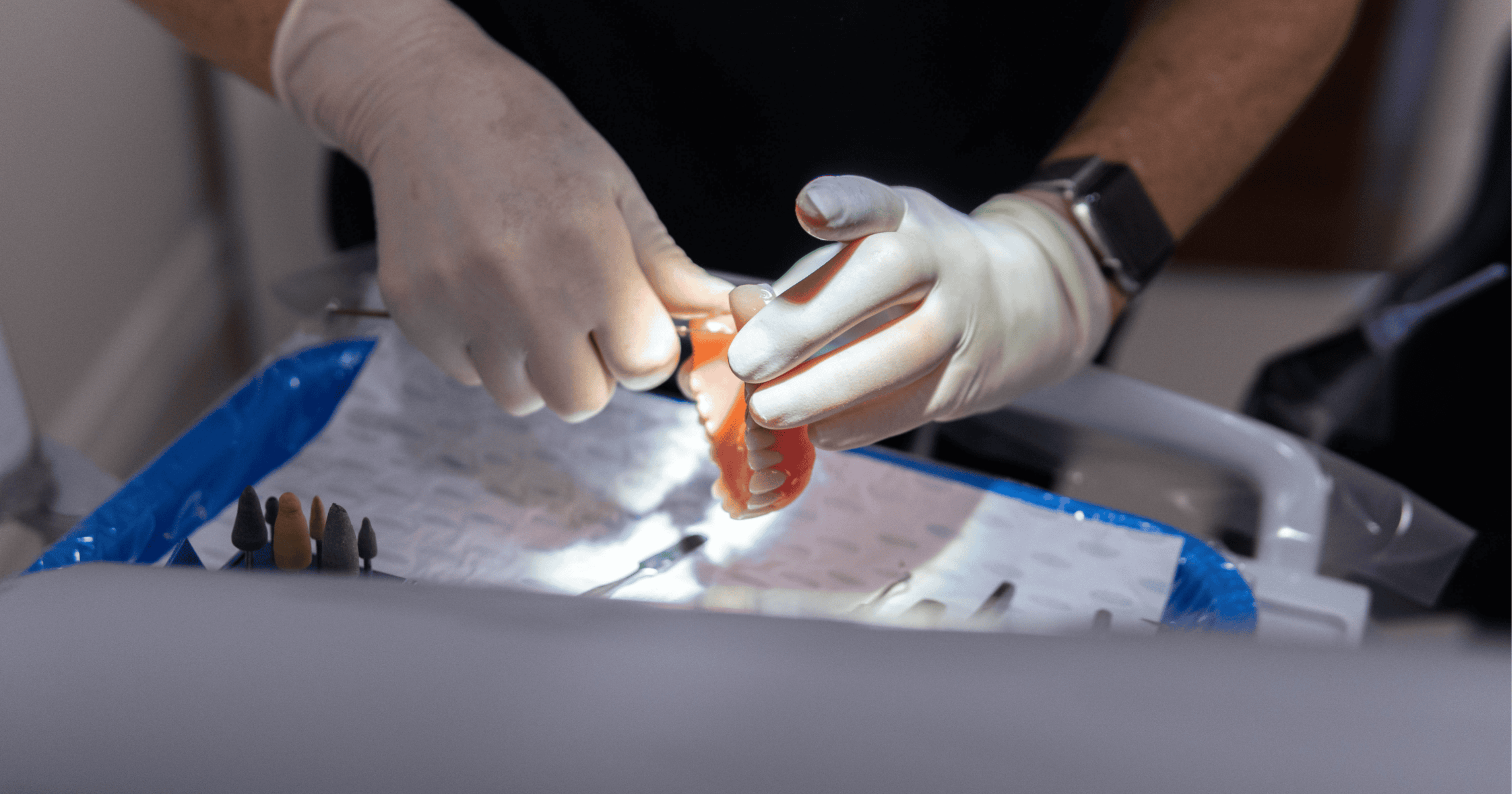
For partial dentures, a metal framework — typically chrome cobalt — provides a thinner, stronger base than acrylic alone. The metal framework clips to your natural teeth and is more stable during eating and speaking. Many patients find metal framework partials more comfortable in the long term because of the reduced bulk.
Implant-Retained Dentures
This option secures a full denture using dental implants for added stability and comfort. Two to four implants are placed in the jaw, and the denture snaps or locks onto them. This removes the reliance on suction or adhesive and significantly improves retention — particularly in the lower jaw, where standard full dentures can be less stable.
Implant-retained dentures suit patients who’ve experienced bone loss and find conventional full dentures difficult to keep in place. They require sufficient bone volume for implant placement, so a thorough assessment is needed first.
Your dentist will recommend a type based on how many teeth you’re replacing, the condition of your remaining teeth and bone, and what will give you the best functional result.
The Fitting Process: What to Expect
One of the most common questions patients ask is: ” How long do dentures take to get? The honest answer is that it varies, but understanding each stage helps set realistic expectations.
Initial Assessment
Before any impressions are taken, your dentist will assess your oral health and, if teeth are being extracted, factor in healing time. If extractions are required, immediate dentures may be placed the same day, with a more refined set made once your gums have fully healed.
Impressions
Impressions are taken of your mouth to capture the exact shape of your gum ridges (and remaining teeth, for partials). These are sent to a dental laboratory where your dentures are custom-made. Accuracy at this stage is critical to fit.
Trial Fitting
Prior to completing the final denture, a wax version is made to review the appearance and bite. Adjustments can still be made at this stage — to the tooth position, shape, or shade — before the denture is processed in its final material.
Fitting and Adjustments
When the finished denture is fitted, your dentist will check the bite, comfort, and aesthetics. Small adjustments are often made on the day. It’s completely normal to return for one or more follow-up adjustments in the weeks after fitting — this is part of the process, not a sign that something has gone wrong.
Realistic Timeframes
From initial impressions to final fitting, the process typically takes several weeks. If extractions are involved, allow additional healing time before a permanent denture is made. Your dentist will give you a clear timeline at your consultation.
Adjusting to New Dentures
The first few weeks with new dentures are an adjustment period. Knowing what’s normal makes the process much easier to get through.
Eating
Initially, choose soft foods and cut them into small pieces for easier eating. Chew on both sides of your mouth to distribute pressure evenly. Avoid very hard, sticky, or chewy foods in the early weeks — not because you can’t eat them later, but because your mouth needs time to adapt to the new appliance.
As your muscles and gums adjust, eating with dentures becomes more natural. Most patients return to their usual diet after a few weeks, with some care needed when eating very hard foods.
Speaking
You may notice changes in speech initially — some words may feel different in form. This is temporary. Reading aloud and practising at home helps speed up the adjustment. You may find that your mouth and tongue adapt to the appliance’s position more quickly than expected.
Soreness
Some soreness in the gums is normal in the early weeks, particularly at pressure points. This often settles with time and minor adjustments from your dentist. If soreness is persistent, causes sores, or affects your ability to eat, contact the practice — don’t just push through it. Small adjustments can lead to noticeable improvements.
When to Call the Practice
Contact your Mount Lawley dentist if you experience:
- Persistent or worsening sore spots
- The denture feels loose or is moving significantly during eating
- A crack or chip in the denture
- Changes in your bite that don’t settle after the initial adjustment period
Caring for Your Dentures
With proper maintenance, dentures last longer, and your oral health is better protected.
- Daily cleaning: Remove your dentures after eating and rinse them. Clean them at least once daily with a soft-bristled denture brush and a non-abrasive denture cleanser. Avoid regular toothpaste — it’s too abrasive and can scratch the surface.
- Soaking overnight: Most dentures should be stored in a moist environment when not in use to prevent warping. Store them in a denture-soaking solution or plain water overnight. Check with your dentist — implant-retained dentures may have different storage requirements.
- Handle with care: Dentures may crack or break if dropped, so it’s best to clean them over a folded towel or in a basin of water to soften the impact of any accidental falls.
- What to avoid: Hot water (it can warp acrylic), bleach-based products on dentures with metal components, and whitening toothpastes.
- Your natural teeth and gums: If you still have natural teeth, continue brushing and flossing as usual. Even with full dentures, clean your gums, tongue, and palate daily with a soft-bristle toothbrush to maintain oral tissue health and reduce bacteria.
- Regular check-ups: Dentures don’t last forever. As your mouth changes shape over time, fit may be affected, making regular dental check-ups important for assessing fit, wear, and soft tissue health.
Cost Factors for Dentures in Perth
Denture costs vary depending on several factors. Without knowing the specifics of your case, it’s not possible to provide a figure up front — but here’s what influences the overall cost.
- Type of denture: Full dentures generally cost more than partial dentures. Implant-retained dentures involve both the implant placement and the denture itself, making them the higher-cost option.
- Materials: Metal framework partials typically cost more than acrylic partials due to the materials and laboratory work involved. Premium acrylic teeth can also affect pricing.
- Number of teeth: For partial dentures, the number of missing teeth being replaced affects the complexity of the appliance.
- Laboratory fees: Custom-made dentures require skilled laboratory work. The quality of the lab affects both the cost and the result.
- Extractions: If teeth need to be removed before dentures are made, extraction fees are separate.
- Health fund rebates: Many private health funds in Australia include cover for dentures under major dental. The rebate amount depends on your level of cover and your fund. It’s worth checking with your provider before your appointment — your practice can also help clarify what you may be eligible for.
Frequently Asked Questions
How long do dentures take to get?
The process from impressions to final fitting typically takes several weeks. If extractions are needed, additional healing time is required before permanent dentures are made. Your dentist will give you a clear timeframe at your first appointment.
How much do dentures cost in Perth?
The cost depends on the type of denture, materials used, number of teeth being replaced, and whether extractions are involved. Depending on your policy, private health insurance may contribute a partial rebate under major dental. A consultation is needed for an accurate quote.
Can I eat normally with dentures?
Most patients return to a varied diet within a few weeks of fitting. Starting with soft foods and building up gradually makes the adjustment easier. Some very hard or sticky foods may always require more care.
How long do dentures last?
With proper care, dentures typically last five to ten years. As your jawbone and gum tissue change over time, the fit can be affected, making ongoing dental check-ups important even after you feel comfortable.
What’s the difference between full dentures and partial dentures?
Full dentures are used when someone has lost all of the teeth in an arch (top or bottom). Partial dentures are temporary solutions to replace only some of the teeth in a mouth where some are still present. It will be decided on the basis of the condition of the remaining teeth and the number of teeth that are missing.
Dentures in Mount Lawley
If you’re missing teeth and exploring your options, a conversation with our team is the right first step. At Chelmsford Dental Mount Lawley, we see patients from Mount Lawley, Highgate, Inglewood, Maylands, Menora, and across Perth, and we’ll take the time to assess your situation and walk you through what’s realistic for your case.
No pressure, no assumptions — just a clear picture of what’s involved and what will work best for you.
Call us on (08) 6146 2555 or book online.
Visit us at 2 Chelmsford Road in Mount Lawley WA.