
If you’re considering teeth whitening, the biggest question usually isn’t what options exist — it’s what the experience will actually be like and whether the results are worth it.
For many patients across Perth and Mount Lawley, the uncertainty isn’t about availability, but about outcomes: how white your teeth can realistically get, how long it takes, and whether sensitivity will be an issue.
This guide walks you through what to expect from professional teeth whitening — from how each approach works to what happens during treatment and how to maintain your results afterwards. If you’re weighing up whether whitening is the right step for you, this will help you make a more informed decision.
Choosing Between In-Chair and Take-Home Whitening
When you choose professional whitening through a dentist, you’re choosing from two clinically sound approaches — in-chair whitening and custom take-home trays. Both use professional-grade whitening agents that aren’t available over the counter. The difference is in the experience, timeline, and degree of control.
In-Chair Whitening
In-chair whitening is a single-session treatment performed at the practice. You walk in, sit back for around 60 to 90 minutes, and leave with noticeably brighter teeth that same day. It’s well-suited to patients who want results quickly — before a wedding, an event, or simply because they don’t want to wait.
Custom Take-Home Trays
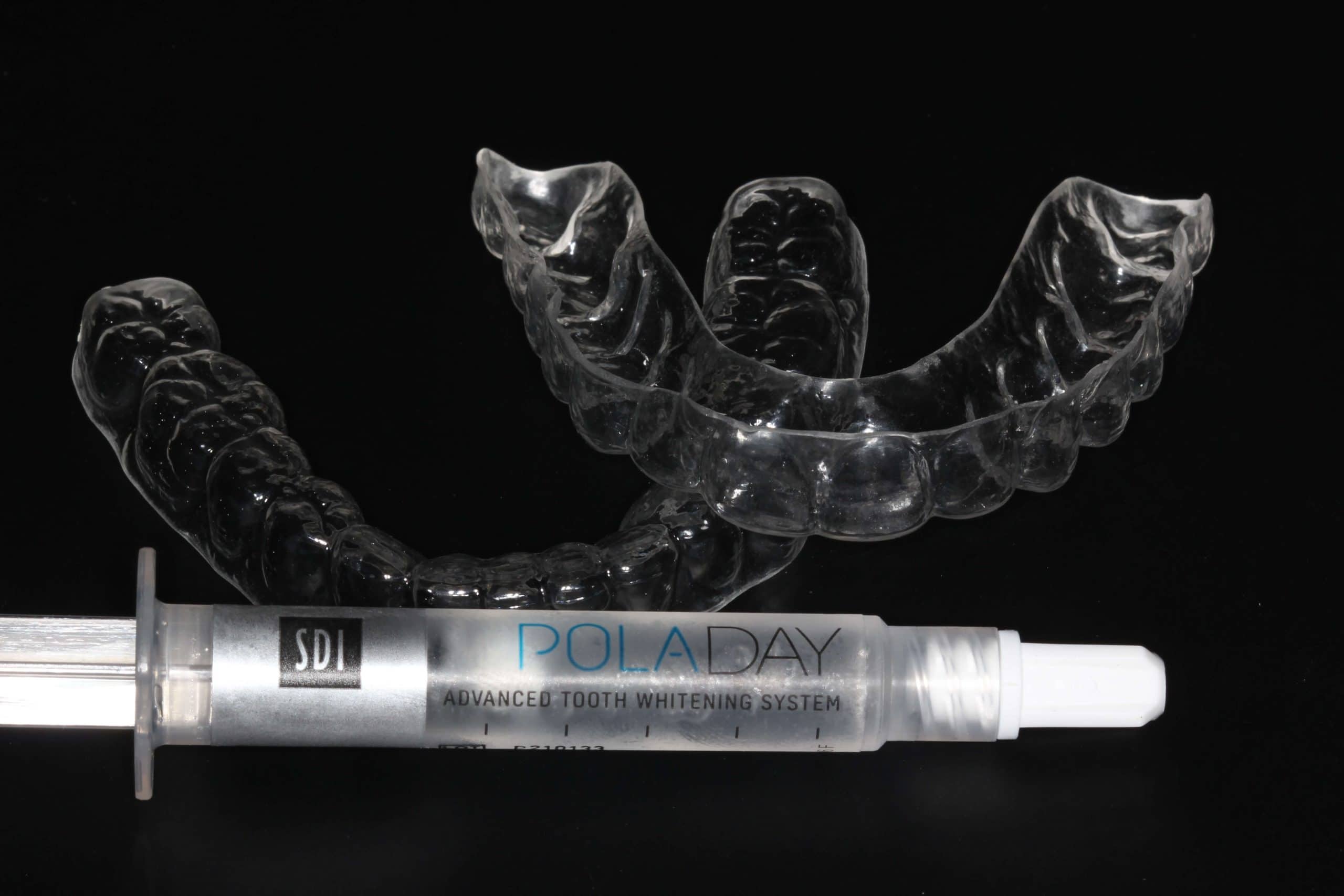
Custom take-home trays work over a period of one to two weeks, using trays made specifically from impressions of your teeth. You apply the dentist-grade gel yourself at home for 30 to 60 minutes each day. The results are gradual but precise, and because the trays fit your teeth so well, the gel stays where it’s meant to — evenly distributed, without pooling or irritating your gums.
Both are effective. The right choice depends on your timeline, your sensitivity levels, and what suits your daily routine.
What About Store-Bought Products?
Whitening toothpastes, strips, and rinses are widely available, but the concentration of whitening agents in these products is significantly lower than what’s used in a dental setting. They can help manage surface staining over time. Still, they won’t produce the same level of change as professional treatment — and poorly fitting strips can cause uneven results and gum irritation.
If you’re looking for a meaningful difference, professional whitening is worth discussing with your dentist.
If you’re comparing all available methods in more detail, you can read our guide on different teeth whitening options to understand how each approach works and what they’re best suited for.
In-Chair Whitening: What Happens During Your Appointment
For patients in and around Mount Lawley, in-chair whitening follows a straightforward process designed to keep you comfortable throughout.
Gum Protection
Before the gel is applied, your gums and lips are carefully protected with a barrier to prevent any contact with the whitening agent.
Gel Application and Light Activation
Once protection is in place, the whitening gel is applied directly to your teeth. Depending on the system used, a light source may be used to activate the gel and support the whitening process.
What to Expect During the Session
The appointment typically runs for 60 to 90 minutes. During that time, the gel may be reapplied in intervals to build up the result. Most patients find the process comfortable — you’re reclined, there’s nothing physically demanding, and you’re free to rest during the session.
Results are visible immediately after treatment. There is usually some post-treatment sensitivity, particularly in the first 24 to 48 hours, but it is temporary and very common.
Take-Home Custom Trays: How the Process Works
Take-home whitening starts with impressions of your teeth, taken at the practice. These are used to fabricate trays that fit your teeth precisely — a critical difference from generic strips or trays, which sit loosely and allow gel to shift.
Getting Your Trays
Once your trays are ready, you’ll be provided with a supply of dentist-grade whitening gel along with clear instructions on how to use it.
Wearing Schedule
The typical schedule is 30 to 60 minutes per day, over one to two weeks. Some patients prefer to incorporate it into their evening routine; others use it during the day — either works, as long as you’re consistent.
Sensitivity and Long-Term Use
Because the process is gradual, sensitivity is generally easier to manage compared to in-chair whitening. For patients with past sensitivity concerns, take-home trays are often the preferred option. The trays can also be kept and reused for future touch-up treatments.
If you’re still deciding between approaches, we’ve broken down the pros and limitations of each method in our article on teeth whitening options.
Managing Sensitivity During and After Whitening
Tooth sensitivity is the most common side effect of whitening treatment, and it’s worth knowing what’s normal and what isn’t.
What’s Normal
Some sensitivity during and immediately after treatment is expected. The whitening agent temporarily opens the enamel’s pores, making teeth more reactive to temperature changes. Usually, this goes away in 24 to 48 hours.
To minimise discomfort, your dentist may recommend using a desensitising toothpaste in the days leading up to treatment. After treatment, continuing to use a sensitive formula for a few days is a practical step.
Mild gum tenderness near the tray edges and temporary white spots on gums are also normal — both resolve quickly.
When to Contact Your Dentist
Reach out if you experience persistent sensitivity lasting more than a few days, significant gum irritation, or pain that feels disproportionate to what’s described above.
Maintaining Your Brighter Smile After Treatment
The work doesn’t stop when the treatment ends. What you do in the first 48 hours after whitening directly affects how well your results hold.
The First 48 Hours
Immediately after treatment, your enamel is more porous and more susceptible to staining. During this window, avoid:
- Coffee, tea, and red wine
- Dark-coloured sauces (soy, tomato-based, balsamic)
- Berries and deeply pigmented foods
- Smoking or tobacco products
Long-Term Maintenance
After the initial 48-hour period, these restrictions ease — but longer-term habits still matter. After ingesting stained foods or beverages, rinse with water, maintain a consistent oral hygiene routine, and attend regular professional dental cleanings, all of which help keep your results looking their best.
For patients who want to maintain their results over time, periodic touch-ups using take-home trays are a straightforward solution. Your dentist can advise on timing based on how your results are holding.
Frequently Asked Questions About Teeth Whitening
How many shades lighter can I expect?
Individual results differ and depend on the natural colour of your teeth, the type of staining present, and the treatment selected. Your dentist can give you a more specific indication during a consultation after assessing your teeth.
How long do results last?
This depends largely on lifestyle factors — dietary habits, smoking, and oral hygiene routine. With regular maintenance and professional cleans, many patients retain their results for a year or more before a touch-up is needed.
If I have veneers or crowns, can I still whiten my teeth?
Whitening agents work on natural tooth enamel and will not change the shade of crowns, veneers, or composite bonding. If your restorations are visible in your smile, whitening may create a noticeable colour mismatch. This is something to discuss with your dentist before proceeding.
Is professional whitening safe for enamel?
Professional whitening, when carried out or supervised by a dentist, is considered safe for tooth enamel. The key is using appropriate concentrations for the right duration, which is exactly what professional treatment controls for.
What about charcoal toothpaste?
Charcoal toothpaste is widely marketed as a whitening product, but the evidence supporting its effectiveness is limited. More significantly, its abrasive texture raises concerns about enamel wear over time. It is not a substitute for professional whitening and is not generally recommended by dental professionals.
There are also common misconceptions around whitening ingredients — for example, whether fluoride has any whitening effect. We’ve addressed this in our article on “ Does fluoride whiten your teeth?“
Teeth Whitening in Mount Lawley
Our dental practice is located in Mount Lawley, with easy access for patients from Highgate, Inglewood, Maylands, Menora, and the Perth CBD.
If you’re considering teeth whitening in Mount Lawley but aren’t sure which option is right for you, the next best step is a personalised consultation.
At Chelmsford Dental Mount Lawley, we can assess your teeth, discuss your objectives, and recommend the most suitable whitening approach based on your sensitivity levels, timeline, and desired results.
Call us on 08) 6146 2555 or book your FREE cosmetic consultation.
Visit us at 2 Chelmsford Road, Mount Lawley, WA.


