Straight teeth without metal brackets, tightening appointments, or a mouth full of wires — for many patients, Invisalign delivers exactly that. Clear aligner treatment has changed how adults and teens approach orthodontics, and if you’ve been putting off fixing your smile because traditional braces felt too disruptive, it’s worth a closer look.
At Chelmsford Dental Mount Lawley, most patients who come in for a consultation say the same thing afterwards: they wish they’d come sooner. This guide covers what Invisalign actually involves — from the process and timeline to costs and what to expect day to day.
What Is Invisalign?
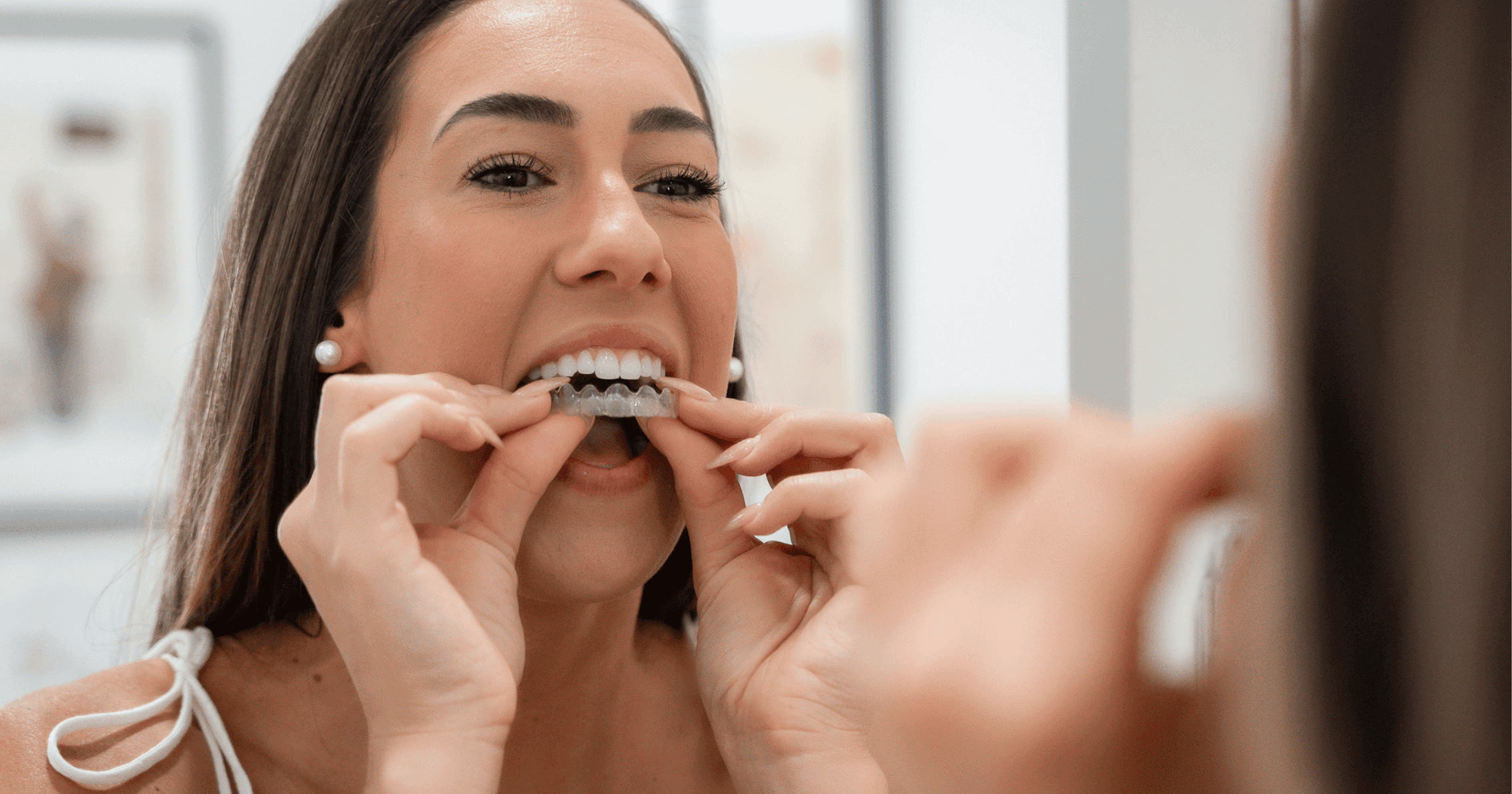
Invisalign uses a series of custom-made, removable clear aligners to shift your teeth into position gradually. Each set is made from smooth, BPA-free plastic and fits snugly over your teeth — close enough that most people won’t notice you’re wearing them.
There are no brackets, no wires, and no tightening appointments. Instead, you progress through aligner sets, each of which applies gentle pressure to move your teeth incrementally.
Aligners can be removed when eating, drinking anything besides water, and brushing, which is why they are often well-suited to adult lifestyles.
What Conditions Can Invisalign Treat?
Invisalign addresses a range of common orthodontic concerns, including:
- Crowding — teeth overlapping or lacking adequate space in the arch
- Crooked teeth — teeth that are misaligned or sitting out of position
- Spacing and gaps — excess space between teeth
- Overbite — upper front teeth biting too far over the lower teeth
- Underbite — lower teeth sitting in front of the upper teeth when biting
- Crossbite — some upper teeth are positioned inside the lower teeth
- Open bite — front teeth may not meet when your mouth is fully closed
Clear aligners work best for mild to moderate cases. Significant jaw discrepancies or severely rotated teeth may still be better managed with traditional braces — your Mount Lawley dentist will be direct about this at your assessment.
Suitability can only be confirmed through a proper clinical evaluation.
The Treatment Process
Consultation
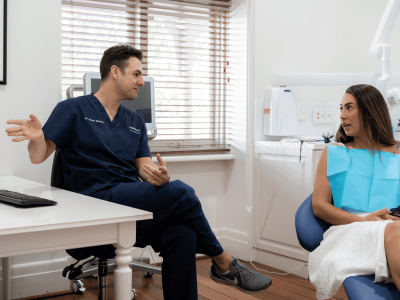
Your first appointment covers your teeth, bite, and alignment goals. Your Mount Lawley dentist will assess whether Invisalign is appropriate for your case — this may include X-rays or other records to get a complete clinical picture. If you’re a suitable candidate, the next steps are confirmed here.
Records and Planning
Once treatment is confirmed, your dentist takes detailed records of your teeth. These are used to create a digital model and map out the full movement of your teeth from start to finish — so the plan is precise and established before a single aligner is made. You’ll have the opportunity to review the projected progression before treatment begins.
Receiving Your Aligners
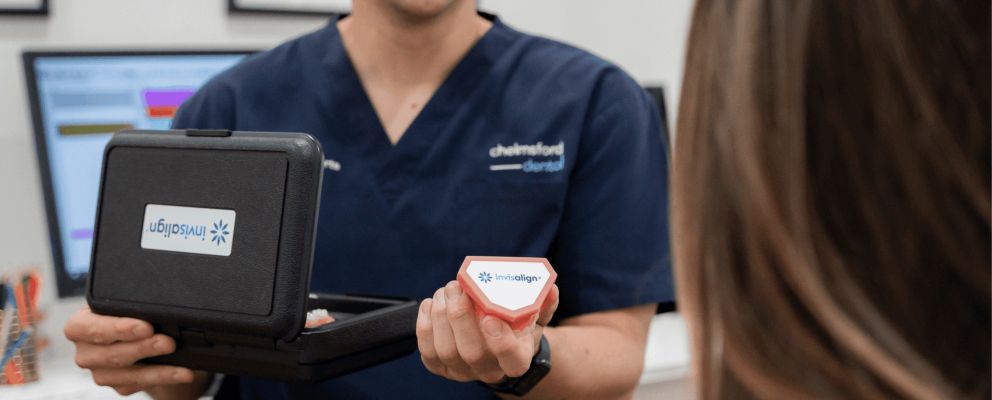
Your custom aligners are designed and produced to follow your treatment plan. At your fitting appointment, your dentist checks the fit and explains how to insert and remove the trays correctly. Small tooth-coloured composite attachments may be bonded to certain teeth to help the aligners apply more targeted pressure where needed.
Ongoing Wear and Progress Checks
Aligners must be worn for at least 20 to 22 hours per day. You switch to a new set every 1 to 2 weeks, with each set continuing the movement from the previous one. Progress check appointments are scheduled periodically so your dentist can confirm that your teeth are tracking to plan and address any needed adjustments.
Treatment Timeline
Most cases take between 6 and 18 months, depending on what’s being corrected. Minor crowding or small gaps may resolve toward the shorter end of that range. More complex cases involving significant bite correction can run longer.
For straightforward cases, shorter treatment options with fewer aligners may be available. Your dentist will recommend the appropriate approach based on your clinical needs — not a general estimate.
The timeline assumes consistent aligner wear. Treatment extends when aligners aren’t worn as directed. Compliance is the one variable patients fully control.
Living with Invisalign
Most patients adapt within the first week or two. Here’s what to expect across the situations that come up most often.
- Eating and drinking — Remove aligners before eating or drinking anything other than plain water. Rinse your mouth before reinserting.
- Cleaning your aligners — Rinse with water each time you remove them. Use a soft toothbrush to brush gently; do not use toothpaste because it is harsh and eventually clouds the plastic. A dedicated aligner cleaner or diluted clear soap works better for a deeper clean.
- Speech — A slight lisp is common in the first few days as your tongue adjusts. It typically resolves quickly.
- Sport — Remove aligners during contact sports and use a mouthguard as normal.
- Travel — Pack your current and next aligner set in your carry-on. If you’re away for more than 2 weeks, speak to your dentist about moving to the next set early.
- Social situations — The aligners are discreet in conversation. They’re removable for photos or formal events, though extended removal should be kept to a minimum.
Cost Factors
Several things influence the overall cost of Invisalign treatment:
- Case complexity — More movement means more aligners and a higher overall investment.
- Refinements — Additional aligners may be needed mid-treatment or at the end to fine-tune the result. Check whether refinements are included in the quoted fee or billed separately.
- Private health insurance — Extras cover with an orthodontic benefit may contribute toward treatment costs. Check your policy for applicable limits and any waiting periods.
- Payment plans — Many practices offer staged payment options across the treatment period. Ask about this at your consultation.
Any figure given before a clinical assessment is an estimate. A treatment plan is the only way to get an accurate cost.
Frequently Asked Questions
Does Invisalign hurt?
Most patients experience some pressure or mild tenderness for the first day or two after switching to a new tray — not the sharp discomfort sometimes associated with wire adjustments. Over-the-counter pain relief is usually sufficient if needed.
Can teenagers use Invisalign?
Yes. Invisalign is a popular option for teenage patients and avoids the self-consciousness that often comes with traditional metal braces. Suitability depends on whether the patient’s adult teeth have adequately erupted — your dentist can confirm this at assessment.
How often are check-up appointments?
Progress appointments are scheduled periodically throughout treatment. These are generally shorter than traditional orthodontic visits and focus on confirming your teeth are moving as planned.
Can I see the expected outcome before starting?
Yes. Before any aligners are made, your dentist reviews a digital plan showing the projected movement of your teeth from beginning to end. It’s a clinical planning tool — individual responses to treatment vary.
What happens after treatment?
After active treatment, retainers help keep your teeth in place while the surrounding bone stabilises. This is typically managed with a removable retainer worn at night or a fixed wire bonded to the back of the teeth. Skipping retention is the most common reason results shift over time.
Invisalign in Mount Lawley
If you’d like straightforward advice on whether Invisalign is a good fit for your teeth, we’re here to help. Chelmsford Dental Mount Lawley sees patients from Mount Lawley and the surrounding areas of Highgate, Inglewood, Maylands, Menora, and Perth CBD.
Call us on (08) 6146 2555 or book online. You’ll find us at 2 Chelmsford Road, Mount Lawley WA.