

Your gums do more than frame your smile—they support and protect your teeth. Yet gum disease often develops quietly, and many people only notice something is wrong when discomfort, bleeding, or loose teeth appear.
Recognising gum disease symptoms early allows you to act before serious damage occurs. Early detection often means simpler treatment and better long-term results.
Understanding these warning signals might help you keep your gums healthy and avoid more serious concerns.
What Is Gum Disease?
Gum disease, also called periodontal disease, affects the gums and the structures that support your teeth, causing inflammation and infection. It develops when bacteria accumulate along the gum line and form plaque.
If plaque isn’t cleared away by brushing and flossing, it can solidify into tartar. This irritates the gums, allowing bacteria to thrive and leading to inflammation and infection.
There are two main stages:
Gingivitis
Gum disease begins with a mild condition called gingivitis. Gums become irritated and inflamed, but the bone supporting your teeth remains unaffected.
Common gingivitis symptoms include:
- Red, swollen, or tender gums
- Bleeding when brushing or flossing
- Mild bad breath
The good news is that gingivitis is usually reversible with professional cleaning and improved oral hygiene.
Periodontitis
Without treatment, gingivitis may develop into periodontitis, a more severe stage of gum disease, where the infection reaches below the gum line and begins to affect the bone and tissues supporting your teeth.
Symptoms of periodontitis may include:
- Gum recession
- Loose or shifting teeth
- Persistent bad breath
- Discomfort when chewing
Treatment at this stage is more complex, and ongoing care is often required to manage the condition.
Early Warning Signs of Gum Disease
Noticing gum disease symptoms early can make a big difference in treatment outcomes. Watch for:
Bleeding Gums
Gums that bleed when brushing or flossing often signal irritation or infection. While aggressive flossing can cause occasional bleeding, regular bleeding should not be ignored.
Red, Swollen, or Tender Gums
Healthy gums are firm and pale pink. Inflammation can make them appear red, puffy, and sensitive, a clear sign that bacteria are affecting the gum tissue.
Persistent Bad Breath
Bacteria under the gums release compounds that produce an unpleasant odour. Bad breath that doesn’t improve with brushing or mouthwash may indicate gum infection.
Receding Gums
When gums recede, more of the tooth surface becomes exposed, which may result in:
- Teeth appearing longer
- Increased sensitivity
- Small gaps between teeth and gums
As a result, teeth may become more susceptible to cavities and other problems.
Loose Teeth or Shifting Bite
As periodontitis progresses, supporting bone may break down, causing teeth to loosen or shift. Early detection can prevent tooth loss and preserve your bite.
Pain When Chewing
Pain or discomfort while eating may occur if inflammation spreads deeper into the gum and bone tissue.
What Causes Gum Disease?
Understanding the causes can help you reduce your risk of gum problems:
- Plaque and tartar buildup – the primary cause of gum disease
- Poor oral hygiene – inconsistent brushing and flossing
- Smoking – reduces blood flow and slows healing
- Diabetes – increases susceptibility to infection
- Hormonal changes – pregnancy, puberty, and menopause can make gums more sensitive
- Certain medicines may reduce saliva or cause gum enlargement
- Genetics – some people are naturally more prone to gum disease
Stages of Gum Disease
Gum disease progresses gradually. Recognising the stage helps determine treatment needs.
Stage 1: Gingivitis
- Mild inflammation
- Bleeding gums
- Red or tender tissue
Reversible with professional dental cleaning and improved hygiene.
Stage 2: Mild Periodontitis
- Early bone loss
- Small gum pockets form
- Bad breath and mild gum recession
Requires deeper cleaning and monitoring.
Stage 3: Moderate Periodontitis
- More noticeable gum recession
- Teeth may feel loose
- Discomfort when chewing
- Persistent symptoms from earlier stages
Treatment may include scaling and root planing.
Stage 4: Severe Periodontitis
- Significant bone loss
- Deep gum pockets
- Loose or shifting teeth
- Pain and potential tooth loss
Advanced interventions, including surgical procedures, may be necessary.
Treatment Options for Gum Disease
Professional Cleaning
Removes bacterial buildup and hardened deposits from the teeth and under the gums. Early treatment can reverse gingivitis and prevent progression.
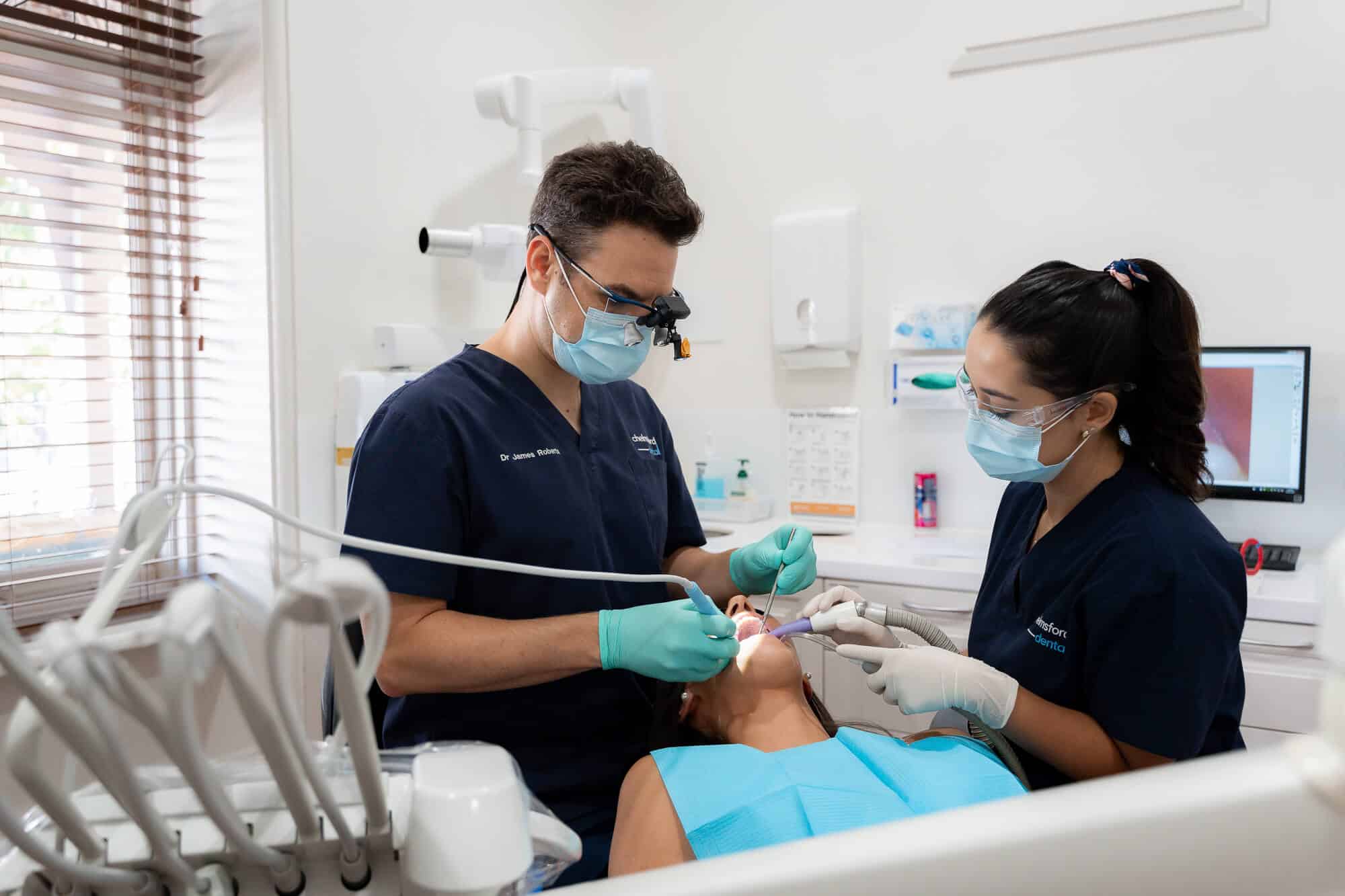
Scaling and Root Planing
Deep cleaning removes bacteria and hardened deposits under the gums, while smoothing the roots to encourage gum tissue to reattach.
Antibiotics
Used to control bacterial infection. It may be applied directly or taken orally, usually alongside other treatments.
Surgical Treatment
For advanced periodontitis, surgical procedures can reduce gum pockets or restore tissue. Options may include:
- Pocket reduction
- Bone or tissue grafting
Ongoing Maintenance
Even after treatment, regular dental visits are essential to monitor gum health and prevent recurrence.
How to Prevent Gum Disease
Preventing gum disease focuses on consistent daily care and healthy habits:
- Clean your teeth thoroughly – two times daily, using a soft-bristle brush
- Floss daily – removes plaque between teeth
- Visit your Mount Lawley dentist regularly – early detection prevents complications
- Quit smoking – improves healing and gum health
- Maintain a balanced diet – vitamins and minerals support gum tissue and immunity
Frequently Asked Questions
Can gum disease be reversed?
Early gum disease, gingivitis, is often reversible with professional cleaning and improved oral hygiene. Advanced stages require ongoing management.
Is gum disease contagious?
Gum disease itself isn’t contagious, but bacteria can transfer via saliva. Practising good oral hygiene helps reduce risk.
How often should I get professional cleanings?
Professional dental cleanings are generally recommended every six months, but your dentist might advise more frequent visits if needed.
Is there a connection between gum disease and heart health?
Research has found that gum disease may be connected to certain systemic health issues, such as heart disease. Maintaining healthy gums supports overall well-being.
Gum Disease Treatment in Mount Lawley
If you notice bleeding, swelling, bad breath, or gum recession, it’s time for a check-up. Early assessment can help detect signs of gum infection before they progress.
Patients from Mount Lawley, Highgate, Inglewood, Maylands, Menora, and Perth CBD often visit for routine care and gum health monitoring. Professional cleaning and personalised treatment can manage symptoms and maintain long-term oral health.
Call 08) 6146 2555 or book online. Visit us at 2 Chelmsford Road, Mount Lawley WA


